How Disposable Email Addresses Protect Your Real Inbox
Kieran Goodary
What are disposable email addresses, and why should you care?
Disposable email addresses - sometimes called burnable or temporary inboxes - are email accounts you can create quickly and discard immediately after use. Think of them as digital throwaway phones for your email. Instead of handing over your real email address when signing up for newsletters, services, or trials, you generate a unique temporary inbox that forwards messages or makes the content accessible only for as long as you want.
So why should you care? Because your real inbox is precious real estate. It’s where your personal and professional communications live. Filling it up with newsletters, promotional spam, or worse, phishing and malware-laden emails is a nightmare waiting to happen. Disposable inboxes help you quarantine the clutter before it ever gets close.
How do disposable emails protect your privacy?
When you use disposable emails, you minimize the exposure of your real email address. That reduces the risk of it getting sold to spammers or stolen in a data breach. Many online services require an email to sign up, often pushing you to share your permanent contact details. Using a disposable email means you give out something that can self-destruct, not your lifetime digital ID.
Also, because disposable emails are often linked to no personal info, your data footprint shrinks. You can sign up anonymously or pseudonymously, sidestepping targeted ads or unwanted marketing calls linked to your real identity.
Can disposable emails help with trial sign-ups and one-time offers?
Absolutely. Ever signed up for a service’s free trial only to be bombarded with daily promotional emails afterward? If you use your real inbox, odds are you’ll be getting newsletters, related offers, or even sleazy upsell attempts for years.
By using a disposable email, you isolate those marketing campaigns from your main inbox. When the trial’s over, just delete or abandon the disposable address. No more unsubscribing, no more spam, no long-term commitment to mailbox hygiene on that front.
How do developers and product teams benefit from disposable email inboxes?
Disposable emails aren't just a user convenience - they’re an indispensable tool in testing and development workflows. When you're building web apps or services that involve email verification, OTP (one-time password) authentication, or notification emails, you need a reliable way to receive and parse those emails automatically.
Rather than juggling shared Gmail accounts - which risk cross-contamination, quota limits, and manual checking - disposable inbox APIs offer programmatic, isolated email boxes. Your CI/CD pipelines can spin up fresh inboxes on demand, execute end-to-end (e2e) tests by triggering registration flows, and extract OTP codes directly from incoming email content.
This automation makes email testing less flaky and boring, more repeatable and reliable. The result? Faster, more confident releases without that nagging "did the email really send?" anxiety.
What’s wrong with shared Gmail accounts or regex parsing in email tests?
Some teams use shared Gmail accounts for testing emails. This approach sounds convenient but quickly turns brittle and error-prone. Shared inboxes mean multiple people writing and reading the same mailbox, increasing the risk of deleting an important test email prematurely or missing a message due to notification overload.
Regex parsing is another common trap. People often scrape email bodies using regular expressions to find OTPs or verification codes. But relying on brittle regex can lead to false negatives when email templates change even slightly - which, trust me, they will.
Disposable inbox APIs solve these pain points by allowing clean, isolated inbox creation and offering parsing utilities tuned to handle common email formats. This reduces fragility and frees developers from babysitting email tests.
How do you make email verification “boring” and reliable?
In development, “boring” is good. It means stable, predictable, and automated - exactly what you want from email verification flows. Using disposable emails in tandem with an API that can fetch emails, extract relevant data (like OTPs), and notify your system via webhooks means you can automate the entire process end-to-end.
No manual intervention. No clicking through spam folders or refreshing inboxes. This hands-off approach means your continuous integration (CI) systems can run real-world user scenarios without flaky failures or delayed runs.
Automation also means consistent test coverage for your auth flows, so even subtle regressions get caught early. By taking the email aspect off your plate, you can focus on improving your app’s core features.
How can normal people use disposable emails without losing convenience?
You might think disposable inboxes are just for techies, but plenty of regular folks stand to gain. Many disposable email services offer user-friendly web or mobile apps where you can generate email addresses instantly. Some even support forwarding, so you receive messages in your main inbox for a short period.
Use disposable emails when signing up for newsletters, contests, or trial accounts on sites you don’t fully trust. This way, you avoid long-term clutter and have control over your digital identity.
Pro tip: Avoid addresses that can be guessed. Otherwise, spammers or bots may still abuse those inboxes or retrieve your messages.
What are the risks or limitations of disposable email addresses?
Disposable email is a solid tool, but it’s not magic. Some services outright block disposable domains from signing up. Or your favorite app might require email confirmation with permanent addresses.
Also, if you forget which disposable address you used for a particular account, you may struggle to reset passwords or recover that account later.
Finally, using disposable emails to evade legitimate communication or violate terms of service can land you in hot water. Use them responsibly.
How to get started with disposable inbox APIs in your projects?
If you’re a developer looking to integrate disposable inboxes in your tests or workflows, start by choosing a provider that offers API access designed for automation. Look for features like instant inbox creation, webhook notifications on email arrival, and utilities for parsing one-time passwords or verification links.
Make disposable inbox creation part of your test setup steps. Use webhooks or polling to detect incoming emails. Extract the data programmatically, then feed it back into your test logic.
This approach will save you hours spent manually checking emails or debugging flaky tests.
In summary: Disposable email addresses keep your real inbox clean, your personal data safer, and your testing processes reliable. Whether you’re a regular user tired of spam or a developer building the next great app, disposable inboxes are a quiet superpower for getting the job done without drama.
Ready to unblock your tests and pipelines?
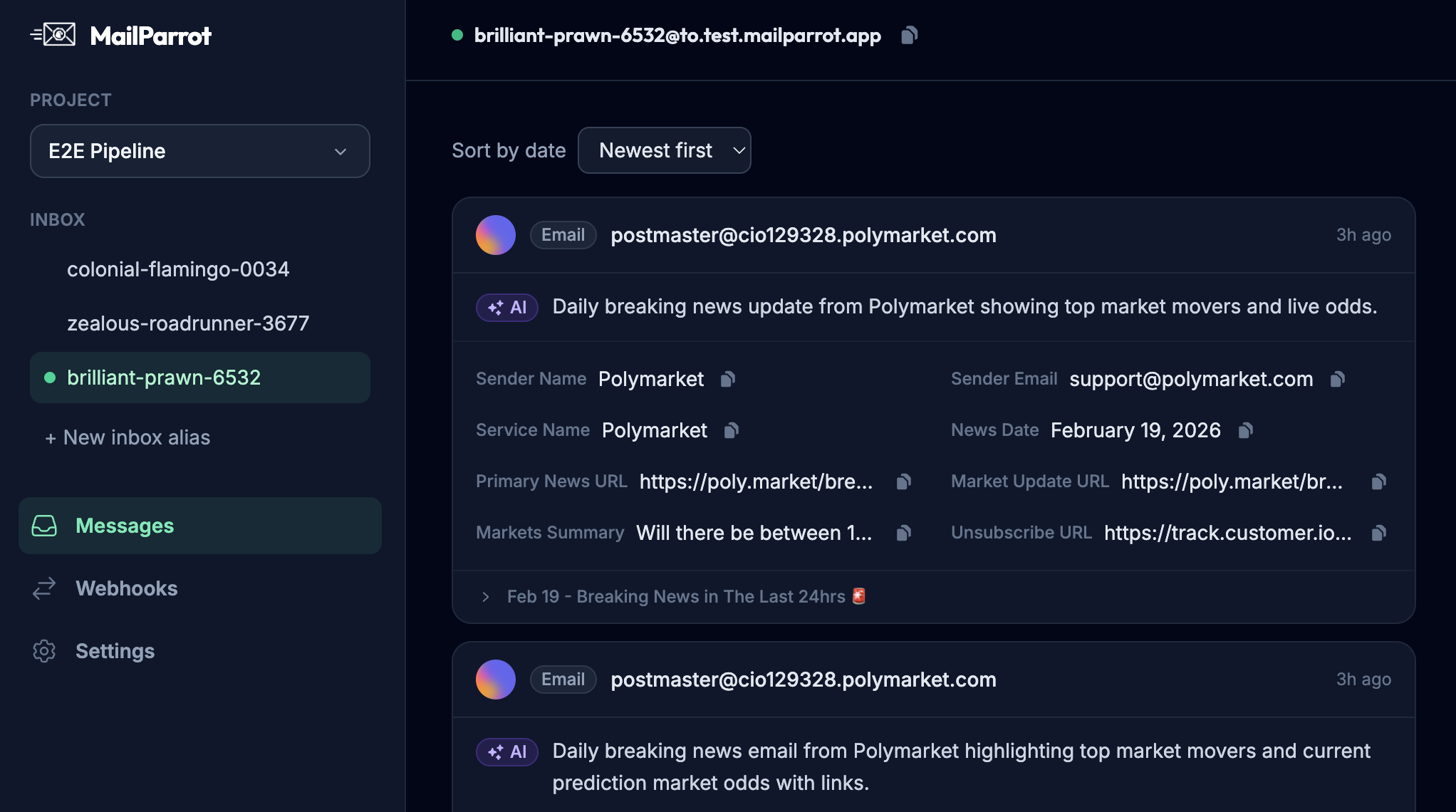
1,000 free credits with every account-no card required. They don’t expire.
Get started for free